
Artikel: Karting Communication Kit Guide: Your 2026 Success Manual
Karting Communication Kit Guide: Your 2026 Success Manual
Imagine you are racing on the final lap, but a vital pit call never reaches you. One missed message can cost the podium, especially as competition intensifies in 2026.
Success now depends on seamless, real-time driver-to-team coordination. This guide will empower you with the latest karting communication kit knowledge, helping you gain a true edge. Discover new technologies, how to choose the right system, clear installation steps, proven best practices, and the future of karting communication.
The Critical Role of Communication in Modern Karting
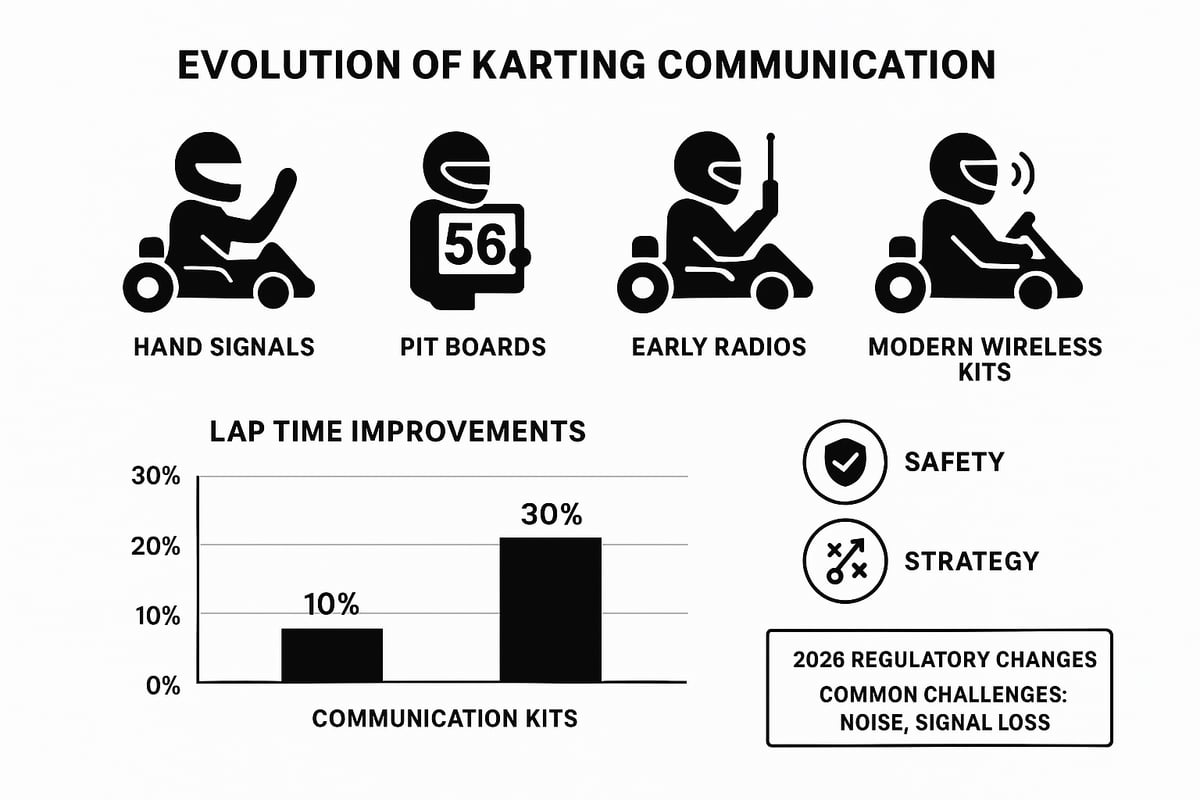
Imagine a time when karting teams relied only on hand signals, pit boards, or shouted instructions to relay vital decisions. The evolution of karting communication kit technology has fundamentally transformed how drivers and teams interact on track. Today, wireless communication tools connect drivers and pit crews instantly, allowing for split-second strategy changes and real-time feedback that was impossible just a decade ago.
Modern karting communication kit systems have become essential for safety, strategy, and performance. Clear, uninterrupted messages help drivers avoid hazards, adapt to changing weather, and execute tactical maneuvers. Teams can warn of accidents ahead, coordinate pit stops, or adjust race plans in response to live data. This seamless flow of information reduces misunderstandings and keeps every team member aligned with the race objectives.
Real-world examples highlight just how critical a karting communication kit can be. There have been championship races won by a single, well-timed instruction, and others lost due to a breakdown in driver-to-pit communication. According to competitor data, teams using advanced communication systems have reported up to a 30% improvement in lap times, underscoring the measurable impact of these tools.
| Statistic / Example | Impact |
|---|---|
| Up to 30% lap time improvement | Faster, more consistent performance |
| Races won through clear instructions | Strategic advantage |
| Races lost due to breakdowns | Missed pit calls, safety incidents |
The regulatory landscape is also changing. For 2026, new rules will require karting communication kit systems to meet updated standards for frequency use, encryption, and interference management. Drivers, coaches, and team managers agree that investing in compliant, high-quality systems is crucial not just for legality, but for competitive success. Many report that reliable communication supports driver development, sharpens coaching feedback, and boosts team morale.
Despite these advantages, teams face ongoing challenges. Noise interference from engines, signal loss in complex track environments, and environmental obstacles can disrupt even the best karting communication kit setups. As the demand for reliable solutions increases, both amateur and professional teams are seeking guidance on best practices and system selection. For a deeper dive into the essentials and strategies behind these systems, consider exploring the Karting Communication Guide, which provides a comprehensive overview tailored to modern racing needs.
With technology, regulations, and competitive stakes all advancing, the karting communication kit is now as fundamental as the kart itself. Teams that master this aspect gain a tangible edge, while those who overlook it risk falling behind in the high-speed world of 2026 karting.
Karting Communication Kit Components: What You Need to Know
Imagine the difference a well-chosen karting communication kit can make when every second counts. Modern kits are engineered for clarity, durability, and adaptability, helping drivers and teams stay perfectly connected on race day.
Essential Components of a Karting Communication Kit
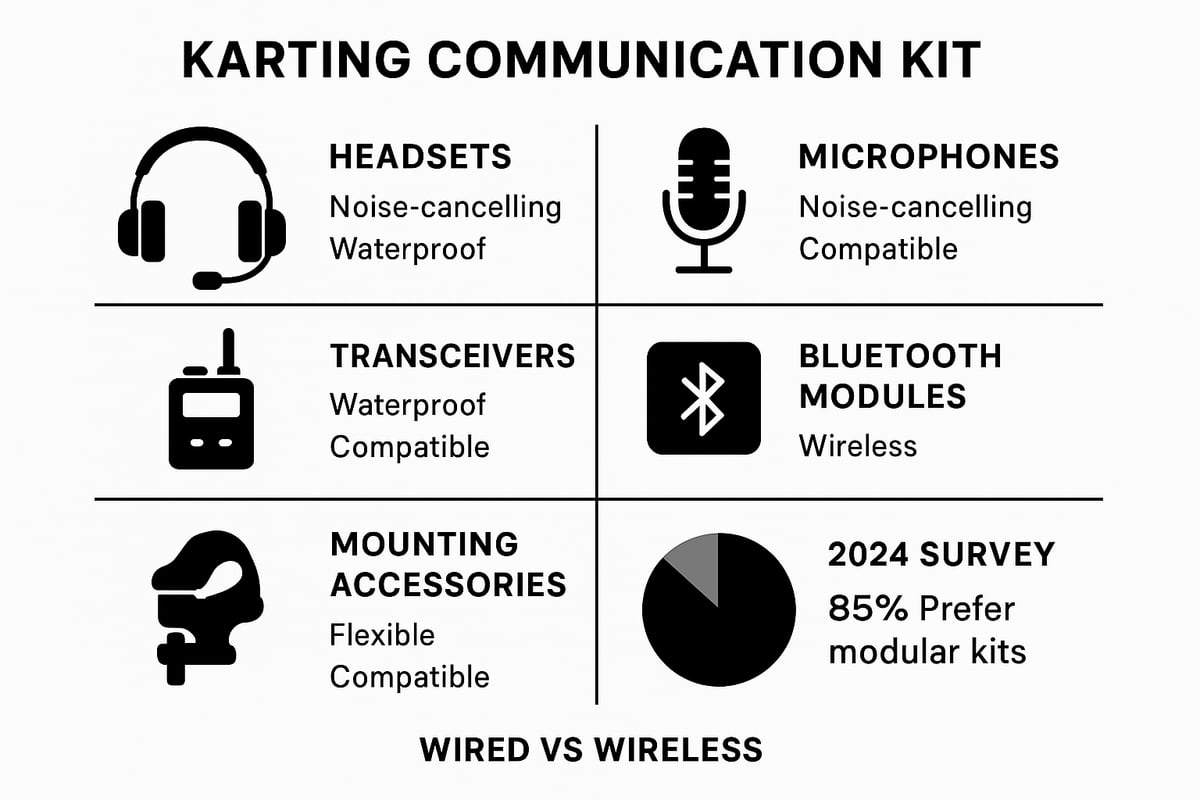
A complete karting communication kit typically includes several key elements, each designed to withstand the demands of high-speed racing environments:
- Headsets: Deliver clear audio to drivers, with comfortable padding and secure fit.
- Microphones: Engineered to capture voice over engine and wind noise.
- Transceivers: Enable two-way communication between driver and pit crew.
- Bluetooth Modules: Provide wireless connectivity and reduce cable clutter.
- Mounting Accessories: Secure components inside helmets and on karts for safety and convenience.
Curious about specific parts and their functions? The Karting Communication System Components page offers a detailed look at each element, helping teams make informed choices.
Wired vs Wireless Systems: Pros and Cons
Choosing between a wired or wireless karting communication kit often depends on race conditions and team preferences. Here is a comparison:
| Feature | Wired System | Wireless System |
|---|---|---|
| Audio Quality | Consistent, reliable | Can vary with interference |
| Setup Complexity | More cables to manage | Easier, less clutter |
| Range | Limited by cable length | Up to 2 km or more |
| Maintenance | Fewer batteries needed | Requires charging |
| Flexibility | Less flexible | Highly adaptable |
Wired kits are valued for their reliability, while wireless systems provide freedom of movement and greater range. Each karting communication kit type has strengths that suit different racing formats.
Technology Features for Performance
In the high-decibel world of karting, background noise is a top concern. Advanced noise-cancelling technology is now standard in most premium karting communication kit models, ensuring drivers can focus on strategy, not static.
Battery life is another crucial consideration. Many kits offer quick-swap batteries or long-lasting power packs to guarantee uninterrupted communication throughout practice and race sessions. Always check charging options and plan for backup power to avoid mid-race failures.
Compatibility, Ruggedness, and Leading Models
Not all kits fit every helmet or kart. Look for a karting communication kit that offers multiple mounting options and adjustable components to ensure a secure fit across brands and models.
Durability matters. Racing environments expose equipment to moisture, vibration, and dust. High-quality kits are waterproof and built with rugged materials to withstand repeated use and harsh conditions.
Top models on the market feature modular designs, allowing teams to upgrade individual parts as technology advances. For example, some leading brands provide headsets with interchangeable microphones or Bluetooth modules with enhanced range.
Why Modular Kits Dominate the Market
According to a 2024 survey, 85% of teams now prefer modular, upgradeable karting communication kit systems. This flexibility means teams can adapt quickly to new rules, track requirements, or technology improvements without replacing the entire setup.
By understanding the core components and features, teams can invest confidently in a karting communication kit that delivers reliable performance, clear audio, and adaptability for years to come.
Step-by-Step Guide: Setting Up Your Karting Communication Kit
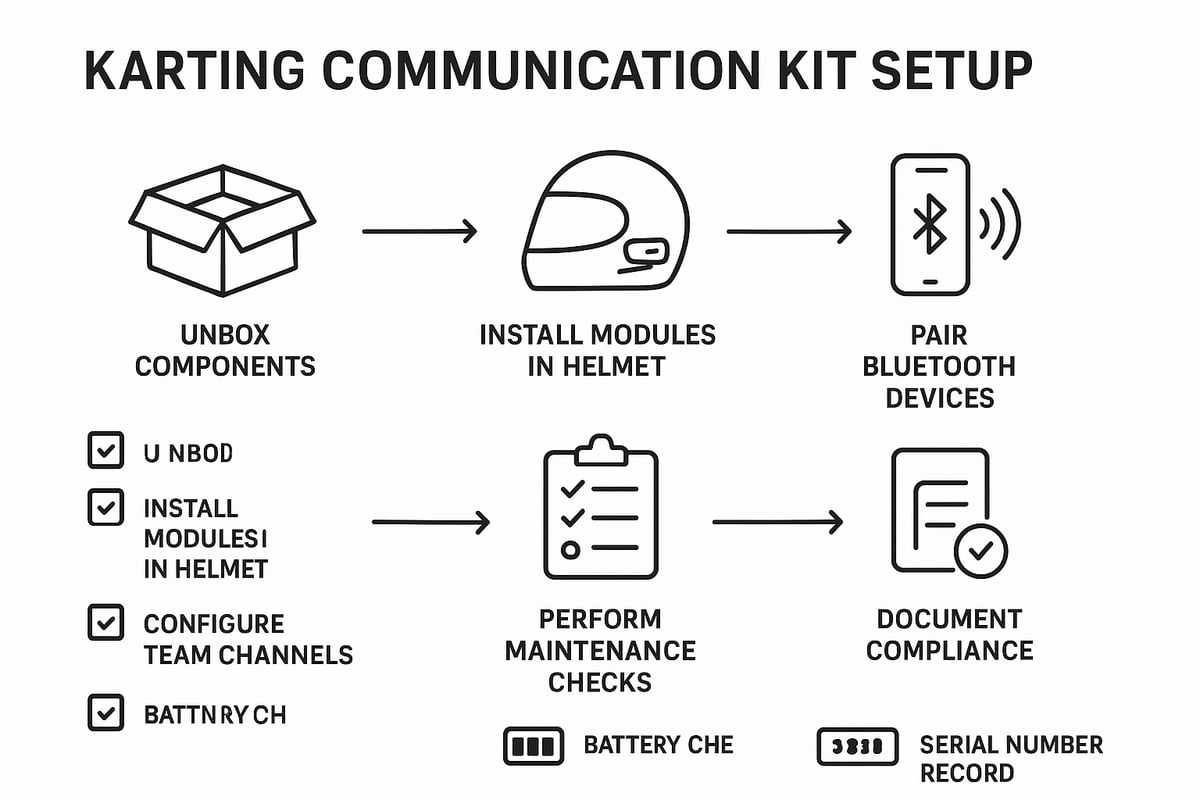
Setting up your karting communication kit is crucial for team performance and safety. A proper setup ensures every instruction reaches your driver instantly, keeping your team ahead on race day. This guide covers each step, from unboxing to compliance, so you can hit the track with confidence.
Unboxing and Inspecting Kit Components
Begin by opening your karting communication kit and laying out all items. A thorough inspection ensures nothing is missing or damaged before you proceed with installation.
Checklist:
- Headsets (driver and pit crew)
- Microphones
- Transceiver/Bluetooth modules
- Mounting hardware and accessories
- Chargers and spare batteries
- Instruction manuals
Examine each piece for signs of shipping damage. Confirm that headset connectors and microphones match your helmet model. Check compatibility with your kart, ensuring mounting accessories fit securely. If you notice any issues, contact your supplier before moving forward. Having the complete and intact karting communication kit is essential for a smooth installation process.
Installing Communication Modules and Headsets
Helmet integration is the heart of a successful karting communication kit setup. Start by reviewing your helmet’s interior and identifying the best spots for the speakers and microphone.
Installation Steps:
- Carefully insert the earpieces into the helmet’s ear pockets or secure them with the provided Velcro pads.
- Attach the microphone boom near the mouth area, ensuring it does not obstruct the visor or interfere with comfort.
- Route cables along the helmet lining, using clips or guides to prevent tangling and maintain neatness.
- Secure the transceiver or Bluetooth module on the helmet’s exterior, using the recommended mounting bracket or adhesive.
- Connect all components, double-checking for firm, secure connections.
Test the fit by having the driver wear the helmet. Adjust the position of the earpieces and microphone for clarity and comfort. A well-installed karting communication kit will not cause pressure points or discomfort, even during extended sessions. For detailed visual instructions and troubleshooting tips, refer to the Getting Started with KartComms guide.
Pairing and Testing Bluetooth/Radio Connections
Once hardware is installed, it is time to activate your karting communication kit and establish clear connections between team members.
Start by powering on each device. Initiate Bluetooth or radio pairing as directed in your kit’s manual. Typically, pressing and holding the pairing button on both the headset and pit module will link them. Confirm that devices are on the correct channel and that no unauthorized devices are connected.
Test the range and audio clarity by having the driver and crew communicate from opposite ends of your track. Listen for static, dropouts, or interference. If issues arise, reposition the modules or adjust antenna placement. Ensuring a reliable karting communication kit connection before race day prevents costly miscommunications.
Configuring for Team Use: Multi-Driver and Multi-Channel Setups
Many teams require a karting communication kit that supports multiple drivers and pit crew members. Proper configuration prevents cross-talk and maximizes efficiency.
Key configuration steps:
- Assign unique channels to each driver and crew group as per your kit’s instructions.
- Label headsets and modules for easy identification.
- Use color-coded stickers or tags to distinguish team roles.
- Program quick-switch buttons if your kit allows for rapid channel changes.
Conduct a team-wide test to confirm everyone is on the correct channel. Practice a short session with live communications to reveal any overlap or confusion. A karting communication kit that is well configured for team dynamics eliminates distractions and keeps everyone focused.
Safety and Maintenance Checks Before Race Day
Routine safety and maintenance checks are vital for keeping your karting communication kit in peak condition. Before every event, follow this quick protocol:
- Fully charge all batteries and keep charged spares on hand.
- Inspect cables and connectors for wear or damage.
- Clean microphones and earpieces with a soft cloth to remove debris.
- Run a systems test, confirming every headset and module is functional.
If you encounter any issues, resolve them before heading to the track. A dependable karting communication kit reduces the risk of mid-race failures and ensures you are always ready for unexpected scenarios.
Documentation and Compliance
Proper documentation helps you track your karting communication kit’s performance and meet regulatory standards.
Record serial numbers for each module and headset. Note the firmware version, channel settings, and any maintenance performed. Store these records in a team logbook, either digitally or on paper.
Check your kit’s compliance with 2026 karting regulations. Regular audits ensure your karting communication kit remains legal and ready for competition. This attention to detail protects your investment and supports long-term success.
Best Practices for Karting Communication: Maximizing Performance
Success with a karting communication kit in 2026 hinges on more than just having the latest hardware. It is about disciplined routines, clarity in messaging, and the ability to adapt under pressure. Consistent best practices transform your kit from a simple tool into a strategic asset that can decide the outcome of a race.
Communication Protocols: Clarity and Consistency
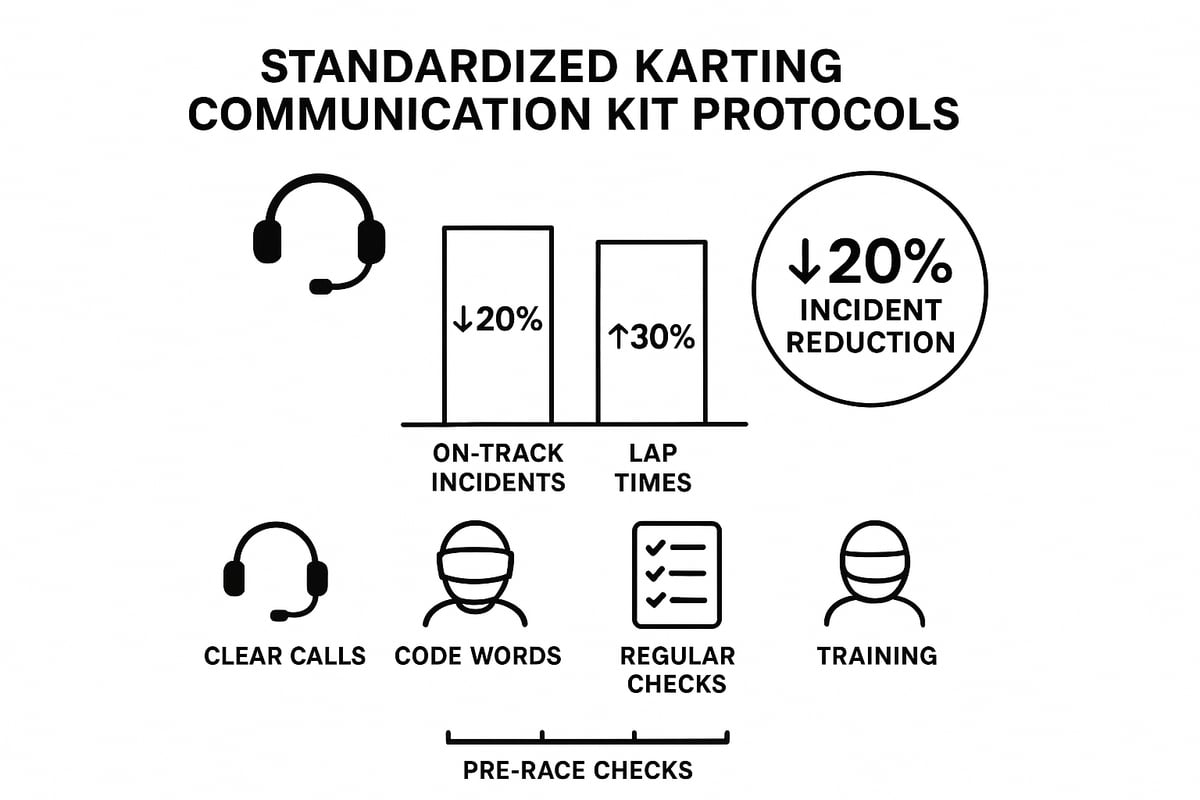
Every team using a karting communication kit should establish clear communication protocols before hitting the track. Use concise calls, pre-defined code words, and keep radio chatter minimal. Assign roles for who speaks and when, so drivers are not distracted by unnecessary updates.
Create a protocol document outlining:
- Standard phrases for pit stops, hazards, and strategy
- Emergency procedures for technical issues
- A chain of command for communication flow
This structure ensures information is delivered at the right moment, reducing confusion during high-intensity situations.
Training Drivers and Crew for Seamless Teamwork
Practice is essential. Schedule regular training sessions where drivers and crew use the karting communication kit in realistic scenarios. Simulate race-day pressures by practicing under different noise conditions and with varying track layouts.
Training should cover:
- Proper headset placement and microphone adjustment
- Role-playing common in-race scenarios
- Feedback sessions to refine timing and clarity
Teams that invest in training build muscle memory, allowing communication to become second nature even at top speeds.
Adapting to Changing Conditions and Technology
Track conditions and noise levels can shift rapidly, so teams must adapt their karting communication kit settings as needed. Adjust microphone sensitivity and headset volume depending on weather and ambient noise. Stay informed about new features, such as advanced noise-cancelling or multi-channel support.
Explore recent advancements in racing headset technology, including 5G integration and mesh networks, which can provide more reliable connections in challenging environments. For more on the latest tech, see Advances in Racing Headsets and Communications Systems.
Case Study: Performance Improvements with Structured Communication
Consider a development team that adopted a standardized protocol for their karting communication kit. By introducing brief, pre-agreed calls and regular system checks, they saw a 30% improvement in average lap times over a season. Incident reports dropped by 20% after implementing a formal communication routine, reflecting safer, more focused driving.
Here is a summary table:
| Metric | Before Protocol | After Protocol |
|---|---|---|
| Avg. Lap Time | 1:12.5 | 1:08.0 |
| Incidents/Race | 5 | 4 |
Data like this underscores how disciplined communication can be a game-changer.
Common Pitfalls and How to Avoid Them
Even the best karting communication kit can be undermined by human error or neglect. Watch out for:
- Over-communication that distracts drivers
- Failing to charge batteries or check connections
- Ignoring environmental factors like rain or dust
- Not updating firmware or settings for new regulations
Prevent these issues by using checklists and assigning responsibility for pre-race checks.
Integrating Communication with Strategy and Coaching
Your karting communication kit should be part of a holistic race strategy. Use it to deliver coaching feedback, relay split times, or adjust tactics on the fly. Teams with standardized communication protocols report 20% fewer on-track incidents, proving that a disciplined approach pays off.
Regularly update your system and review communication routines after each event. This continuous improvement cycle ensures your team stays ahead of the competition and gets the most from its investment.
The Future of Karting Communication Kits: Trends for 2026 and Beyond
Imagine a karting world in 2026 where every decision is powered by data, and every voice is heard crystal clear despite roaring engines. The karting communication kit is no longer just a luxury but a vital tool, shaping how teams compete, strategize, and win. As the sport evolves, communication technology is set to play a defining role in driver development and race outcomes.
The Next Generation of Technology
Modern karting communication kit systems are rapidly integrating AI-powered noise filtering, real-time data overlays, and seamless telemetry connectivity. Innovations like adaptive microphones and smart headsets are reducing background noise and delivering vital information instantly. Teams can now access live vehicle data, making strategy adjustments in real time.
The integration of telemetry is becoming standard, letting teams overlay lap data and voice communications for a holistic approach to racing. According to the Telemetry System (Motorsport) Market Research Report 2033, the adoption of wireless telemetry and communication solutions is accelerating, driving performance gains across motorsports, including karting.
Regulations and Sustainability
Upcoming 2026 regulations will require karting communication kit systems to meet stricter standards for safety, frequency management, and reliability. New rules may mandate encrypted channels and interference-resistant designs, ensuring fair play and driver protection.
Sustainability is also rising to the forefront. Manufacturers are adopting rechargeable batteries, eco-friendly materials, and modular components that can be repaired or upgraded rather than replaced. This trend not only reduces waste but also lowers long-term costs for teams and organizers.
Youth and development karting programs are embracing these advances, preparing the next generation of drivers to use sophisticated communication tools from an early stage. This early adoption is building a foundation for smarter, safer, and more competitive racing.
Predictions and Future-Proofing
Looking ahead, experts predict that karting communication kit platforms will become even more modular, cloud-connected, and integrated with advanced analytics. As the Go Kart Market Size to Surpass US$ 174.70 Billion by 2033 report highlights, the expansion of the global karting industry will increase the demand for robust, scalable communication solutions.
To future-proof your investment, look for kits that offer upgrade paths, cloud-based updates, and compatibility with emerging telemetry systems. Teams that prioritize adaptability and sustainability will be best positioned to leverage the full potential of their karting communication kit, staying ahead of both regulatory changes and the competition.
As you’ve seen throughout this guide, choosing the right karting communication kit for 2026 isn’t just about the latest tech—it’s about building real confidence on the track and making sure every call gets through. Whether you’re racing indoors or out, reliable pit-to-driver audio can mean the difference between a podium finish and a missed opportunity. If you’re ready to take the next step and want to see which solutions fit your team’s needs, I recommend you View KartComms Communication Kits to explore proven, race-ready options trusted by professionals across Europe.
Article written using RankPill.